
Google Ads: Scaling for blinds for home and office.
Country: Australia
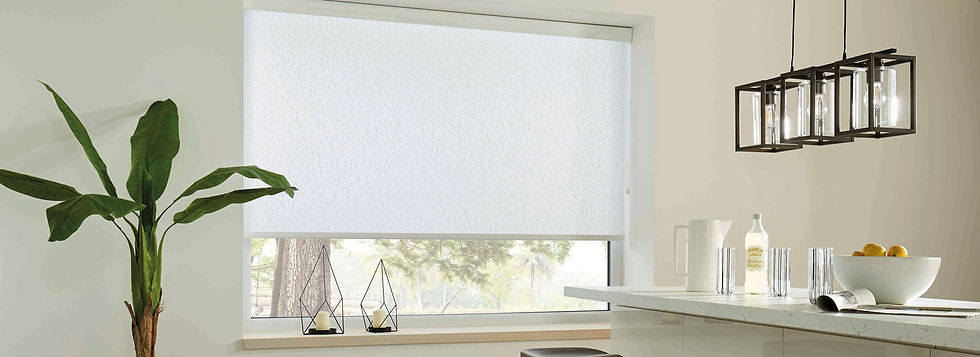
Two Blind Men are specialists in window coverings with Factory & Showroom located in Erina on the Central Coast.
Introduction
Two blind men are window covering specialists with their own factory and showroom located in Erin on the Central Coast. They have more than 10 years of experience in manufacturing and installing blinds and blinds. They offer non-binding measures and rates and install window coverings for homes, offices and commercial projects across Australia.
Challenge
Scaling Results
Niche peculiarity: a lot of competition, since in Australia it is a rather demanded product
In 2020, a client contacted the Blue-Bird contextual advertising agency where I worked. The average ROAS in their campaigns was 700-1400%. Agree, is it good? However, when scaling, they had problems, as more traffic did not bring results in the form of an increase in conversions and, accordingly, simply decreased ROAS. The client tried to scale for six months until he came to us.
Before
Results BEFORE working with the contextual advertising agency Blue-Bird
Results for May - the last month before contacting a contextual advertising agency:
conversions - 797;
conversion rate - 6.70%;
income - 188 188.95 A $
ROAS - 1,278.69%
Stages of work
Working on an advertising account:
1. Initially, I restructured my ad account.
Search campaigns were well structured, but I noticed that the devices did not perform well. A typical situation when most of the traffic comes from mobile, but it is better converted from a computer. Since users can search from a mobile device, and end up buying from a computer, we did not want to completely abandon traffic from both devices. But you need to use budgets more efficiently to improve efficiency.
I decided to split the campaign into different devices. This allowed for better control over budgets for different devices. After the campaigns had enough data, I used various smart strategies for devices.
I saw that the ROAS targeting strategy worked very well for mobile, and clicks maximization for computers. Since, in general, the traffic from computers was more converting, I tried to collect as much traffic as possible for these devices.
2. Structuring Shopping Campaigns.
A common mistake is when all products are added to one Google Shopping campaign at once. This account had the same situation. All types of blinds were in one campaign. We divided all products into different groups according to the type of product, and created smart Shopping campaigns for the more popular ones.
Smart shopping has greater reach and better performance than standard shopping through the use of machine learning and remarketing lists.
3. CCM campaigns
In this project, CCM campaigns were used to increase brand awareness, but without any structuring and tracking of user behavior on the site. There were campaigns, there were banners and responsive ads, they were somehow shown to users with similar interests, and that's it.
I structured the interest / event campaigns and created more themed banners for each audience. And showed them to users who recently had a move event or who recently moved. The creatives had an offer and information about installments and discounts when ordering from X pieces, as well as about delivery to the address and installation. More often, users who were in the process of moving were interested in precisely targeted delivery and installation, because they did not want to bother with this either.
For users who were simply interested in curtains and window decoration, we showed banners with different types of blinds and an offer to order a sample with pieces of fabric. So people could see live how a particular fabric is suitable for their current decor. Most often, such users have nowhere to rush, they prefer the rational choice of “walking around, seeing” and only then choosing. In addition, here we did not sell head-on, we led users to certain articles about the benefits of blinds, their types and possible options.
Later I tracked user behavior. Created a remarketing audience for users who scrolled > 70% and spent > 3 minutes on the page. This is how I filtered users who were more likely to be interested in the product. Then I caught up with them with offers and various promotions. In general, this idea worked, and in the future the audience showed good results.
Website development:
I worked not only on the advertising account, but also on the site itself:
tested different headers as well as their sizes;
tested the location of offers on the page;
tested the location, size, color of buttons with CTA;
That is, I tested all the elements that, according to our hypothesis, influenced user behavior on the site and the conversion rate.
Results AFTER work
After 1 month:
conversions - 973;
conversion rate - 6.32%;
income - 235,082.25 A $
ROAS - 1,569.13%
Comparison of results for 12 months of work:
conversions - from 3 735 to 12 344;
conversion rate - from 3.30% to 6.98%;
income - from $ 1,176,735.35 to $ 3,993,905.40A;
ROAS - from 501.09% to 2,024.61%
Power in Numbers
Conversions - from 3 735 to 12 344
ROAS - from 501.09% to 2,024.61%
Income - from $ 1,176,735.35 to $ 3,993,905.40A;
Conversion rate - from 3.30% to 6.98%;
Project Gallery


